A Place Time Left Behind
The road to Siwa runs straight and long through the Egyptian Western Desert — a ribbon of asphalt across an ocean of pale stone and wind-carved sand. For hours, there is almost nothing: no town, no petrol station, no distraction. Then the palms appear. Thousands of them, rising impossibly green from the desert floor, surrounding a low town of mud-brick and silence. The air smells of salt and dates and something older than either. You have arrived somewhere that has always stood apart from the rest of the world — because, for most of its history, the world could not reach it.
Siwa Oasis lies in a natural depression 560 kilometres from Cairo, 50 kilometres from the Libyan border, and 19 metres below sea level. Its people speak Siwi, a Berber language unrelated to Arabic, and have maintained a distinct culture, architecture, and set of traditions for centuries. Until a tarmac road was cut through to the Mediterranean coast in the 1980s, the only way in or out was by camel track through the desert. That isolation shaped everything — and traces of it remain in every corner of the town.
The Oracle and the King
In 331 BC, Alexander the Great made a journey that his historians struggled to explain. Having just conquered Egypt, at the height of his power and with a Persian empire still ahead of him to subdue, he turned west into the desert — following, the ancient sources say, a flight of birds — and walked into Siwa. He had come to consult the Oracle of Amun, one of the most revered in the ancient world, and to ask a question he never publicly revealed. What the oracle told him, he carried to his death. What we know is that he left Siwa calling himself the Son of Amun.
He was told what his heart desired — and what the oracle said, he kept to himself for the rest of his life.
— Arrian, Anabasis of Alexander
The fragmentary ruins of the Temple of the Oracle still stand on the rocky hilltop village of Aghurmi, overlooking the palm groves below. Built in the 6th century BC on the foundations of an even earlier sanctuary, the temple retains enough of its inscribed stone walls to make the air around it feel genuinely charged. Standing in the inner sanctum where the priests once spoke the god's word, with the desert stretching to the horizon in every direction, it is not difficult to understand why the ancient world treated this place as holy ground.
Shali Fortress and the Mountain of the Dead
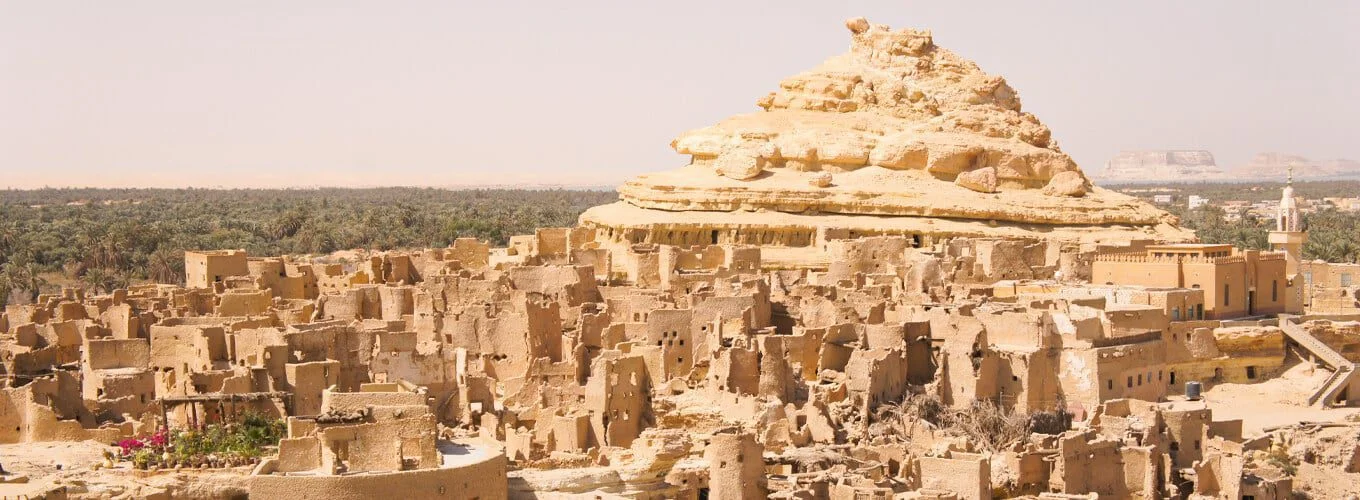
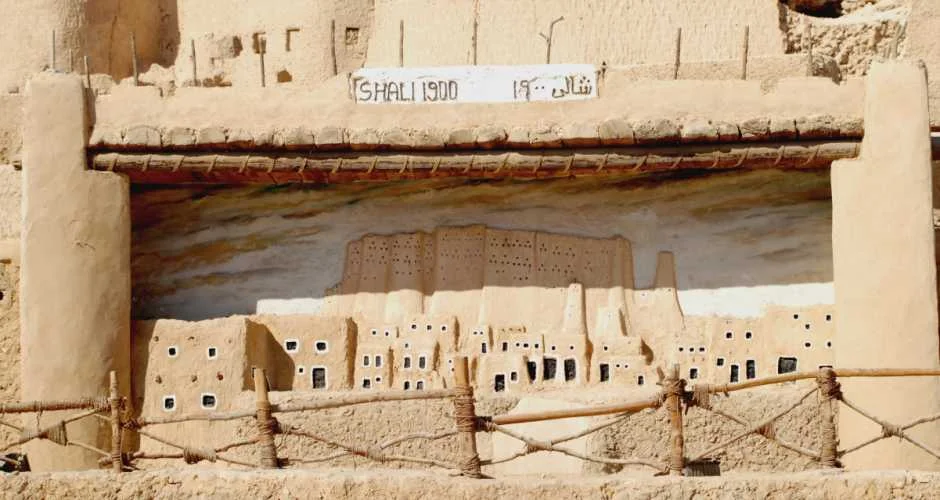
Back in the town, the Shali Fortress rises at its heart — a 13th-century citadel of kershef, the salt rock unique to the oasis, built when the Siwans needed protection from desert raiders. A catastrophic rainstorm in 1926 dissolved much of its outer structure, but what remains is extraordinary: a labyrinth of crumbling towers and eroded walls that glow amber and copper at sunset. Climb to the highest point and the entire oasis spreads below you — palms and salt lakes and sand, all the way to the dunes. A short drive away, the Mountain of the Dead holds hundreds of rock-cut tombs from the 26th Dynasty, their painted walls still legible after two and a half thousand years.
Desert, Salt, and Water
Siwa's appeal is not only historical. The oasis sits at the edge of the Great Sand Sea — a vast dune field that rolls west into Libya and south deep into the Sahara — and the contrast between the lush green of the palm groves and the burned gold of those dunes is one of the most beautiful things Egypt offers. A desert safari by 4x4 takes you into that landscape: over crests that seem to go on forever, past ancient fossil beds where the rock still holds the shapes of coral and sea creatures from when this desert was an ocean floor.
Back in the oasis, Cleopatra's Spring is a natural freshwater pool whose circular stone rim frames water so clear and cool it seems carved from the desert heat. Locals have bathed here for millennia. A short drive further, Fatnas Island rises from a salt lake — a narrow strip of palm trees surrounded by still, mineral water, and the place where most travellers choose to watch the sun go down over the dunes. Bring something to eat. Stay longer than you planned.
The Salt Lakes
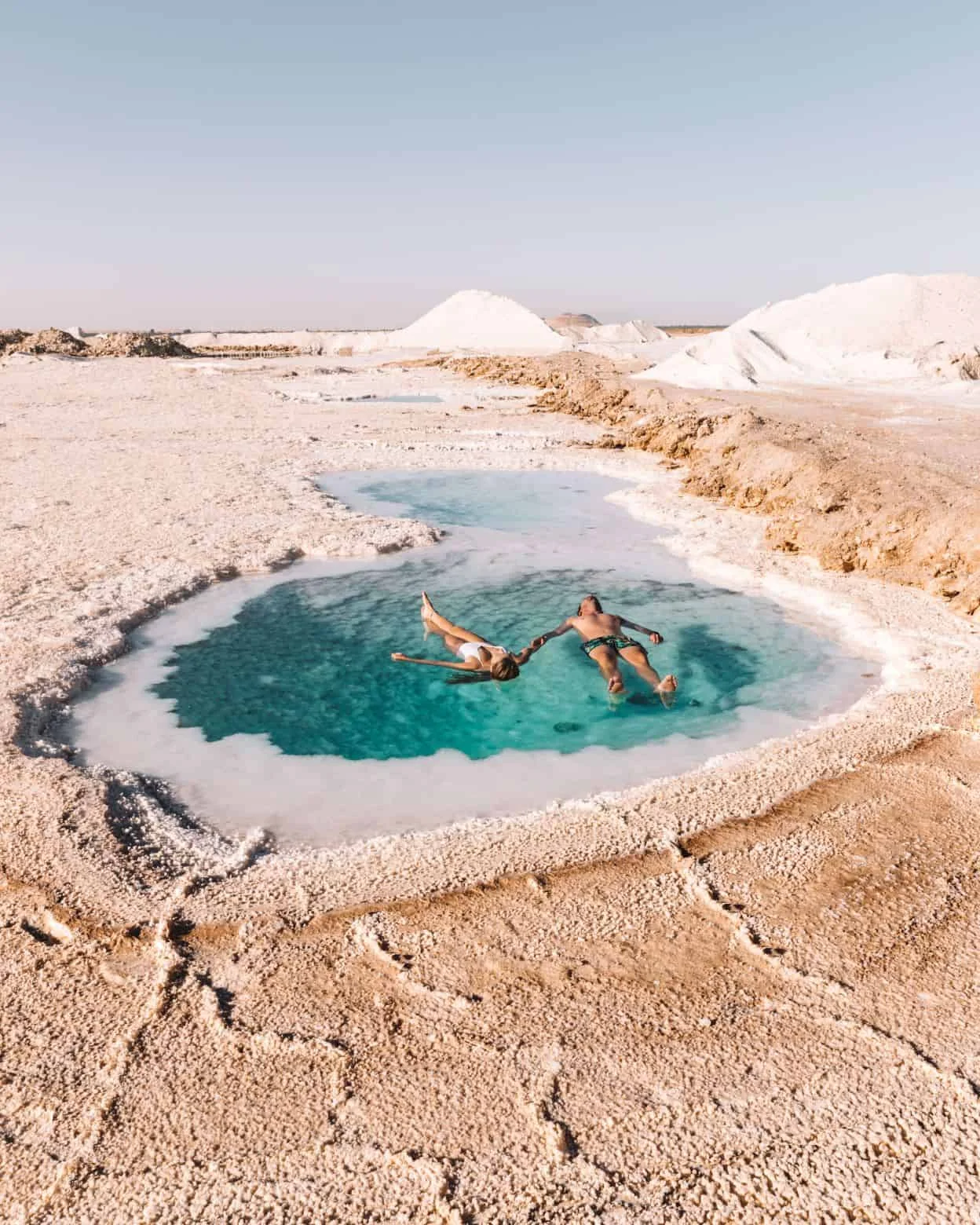
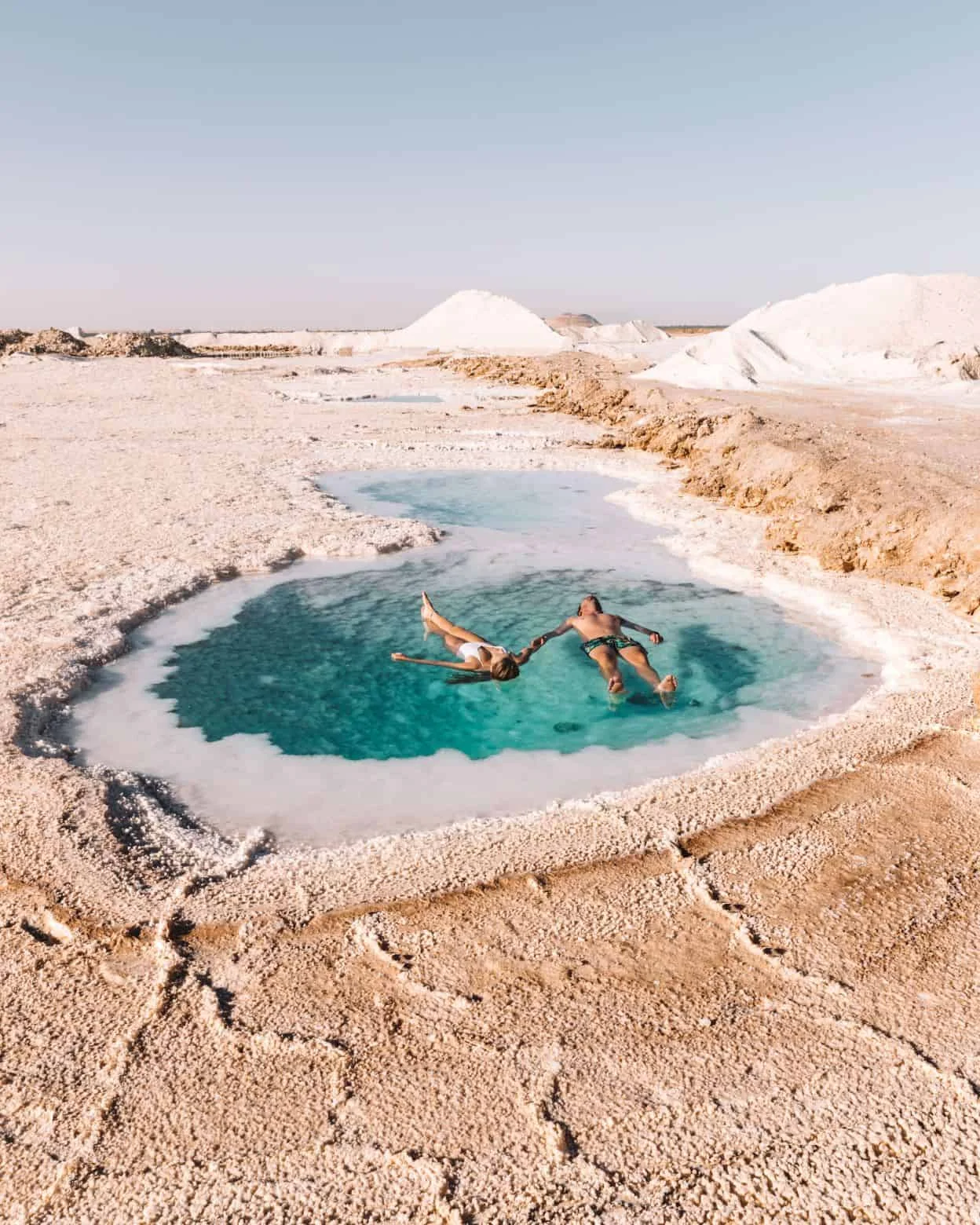
Siwa's salt lakes carry such high mineral concentration that the human body floats effortlessly on the surface. You lie back and look at the sky and feel the peculiar luxury of complete weightlessness. The water is warm and the minerals leave the skin impossibly smooth. It is one of those experiences that sounds unremarkable in description and turns out to be one of the best things you do in Egypt.
A Culture Unlike Any Other
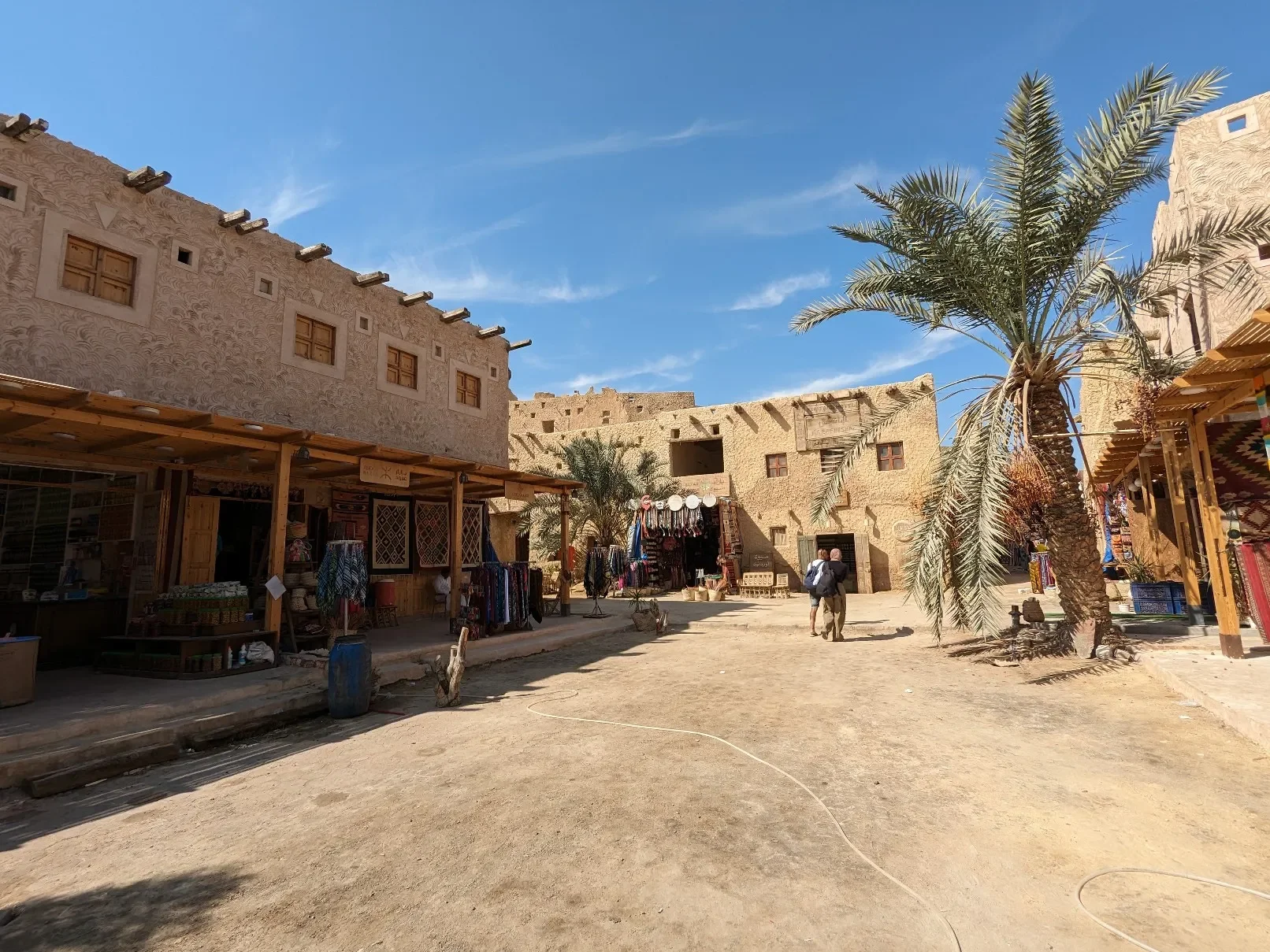
What makes Siwa genuinely singular in Egypt — more even than its landscapes or its history — is its people. The Siwans are Berber, not Arab, and their culture reflects centuries of careful preservation. The Siwi language is spoken by around 30,000 people and belongs to a family of Berber languages that has no relation to Egyptian Arabic. Local women still wear traditional embroidered dress for ceremonies. Siwi silver jewellery — heavy, intricate pieces decorated with symbols common to Berber cultures across North Africa — is made by hand and worn in abundance at weddings and festivals.
The town's crafts market offers some of Egypt's most distinctive souvenirs: hand-woven palm baskets, embroidered textiles, and silver pieces made using techniques passed down through generations. These are not factory goods. They are the products of a living craft tradition that survived in isolation precisely because Siwa was too far from everywhere else for outside influence to dissolve it. Spend time here without rushing. The market moves at the pace of the oasis.
Planning Your Journey to Siwa
Siwa rewards those who treat it as a destination in its own right, not a day trip. Allow a minimum of three nights — four is better. The oasis has a rhythm of its own, and the people who understand it best are the ones who stopped watching the clock.
Getting There
The most comfortable way to reach Siwa is by private car or organised transfer from Cairo or Alexandria — a journey of 10 to 12 hours by road. There is no airport at Siwa. The drive through the Western Desert is part of the experience: long, meditative, and genuinely beautiful in the late afternoon light. Eleganza Travel arranges private, air-conditioned transfers with an expert guide for the full journey.
Where to Stay
- Adrère Amellal: The definitive Siwa experience — 40 rooms built from salt rock and palm timber at the foot of the White Mountain, no electricity, spring-fed pool, meals from the lodge's own garden. One of the most extraordinary places to sleep in Egypt.
- Taziry Ecolodge: Solar-powered, beautifully designed, surrounded by date palms. Well-priced and a genuine immersion in the oasis landscape.
- Talist Siwa: A family-owned farm and lodge running on solar power, with an organic kitchen supplied from the surrounding gardens.
- Ghaliet Eco Lodge: 500 metres from the Oracle Temple, handcrafted stone rooms, a lush courtyard, and a kitchen focused on local produce.
When to Go
October through April is the window. November is ideal — the date harvest fills the air with the sweetness of ripe fruit, the temperatures are warm but not fierce, and the evenings are cool enough to sit outside under a sky undiminished by any city light. Summer in Siwa is extreme: temperatures regularly exceed 40°C and the salt lakes become almost too warm to be refreshing. This is not a year-round destination in the same way Cairo or Luxor is. Come in autumn or winter. Come for at least three days. Come without a full agenda.
Frequently Asked Questions
Plan this journey with Eleganza
Share your dates, pace, and must-see places. Our travel consultants will shape a private itinerary around the way you want to experience Egypt and beyond.