A Monument to Memory
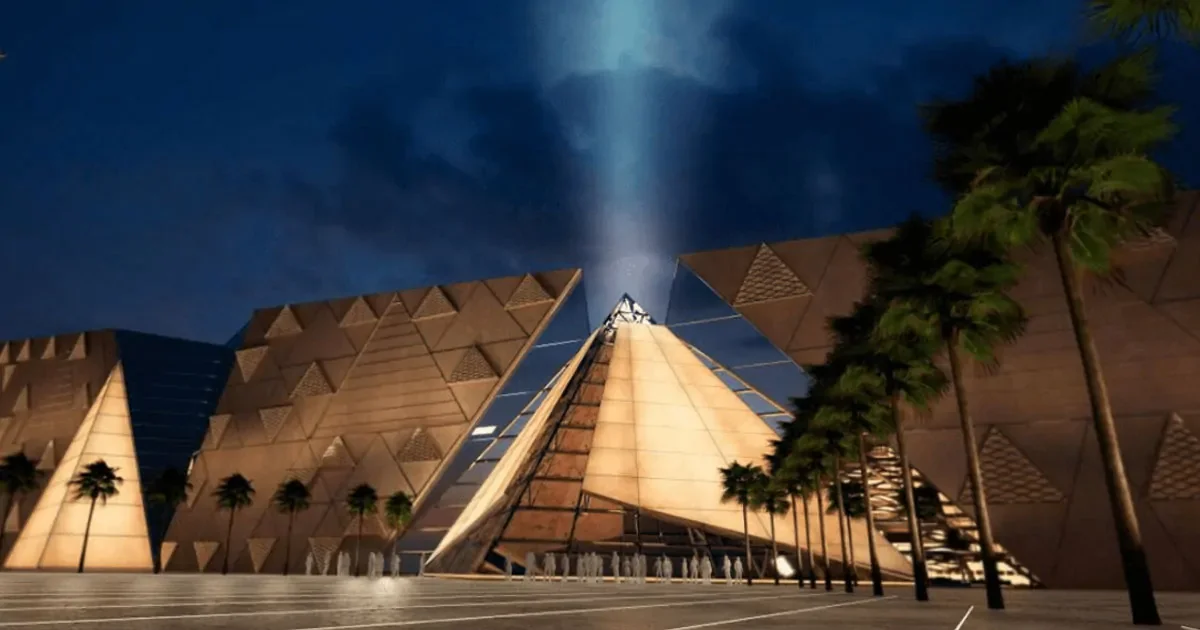
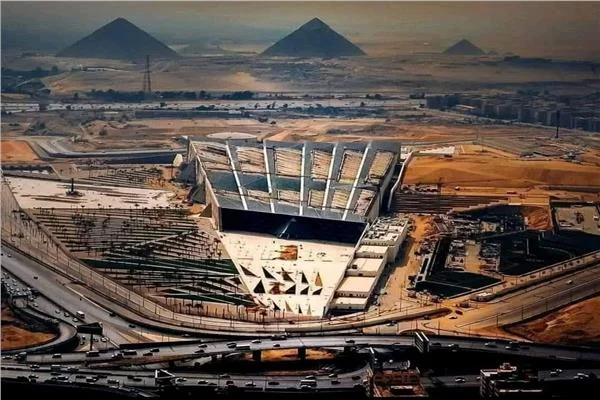
There is a moment, just before you enter the Grand Egyptian Museum, when the full weight of what Egypt has built here becomes real. The building rises from the edge of the Giza plateau like a great translucent cliff — its angled stone façade catching the desert light, the silhouettes of three ancient pyramids visible behind it. The air carries the faint warmth of limestone dust. This is not simply a museum. It is a reckoning with time itself.
Designed by Irish firm Heneghan Peng Architects following an international competition in 2003, the GEM took more than two decades to complete. The result, which opened in full to the public in late 2025, is the largest archaeological museum in the world dedicated to a single civilisation. At 490,000 square metres, housing over 100,000 artefacts, it does not so much display ancient Egypt as contain it.
The Hall That Greets You
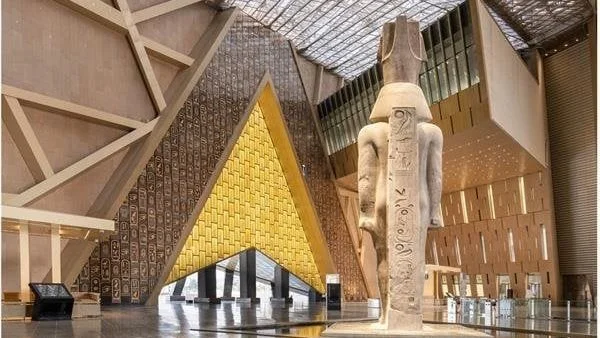
The entrance atrium announces its intention immediately. At its centre, bathed in light drawn down from above, stands a colossal statue of Ramesses II — 11 metres of red granite, 83 tonnes, carved over three thousand years ago and now, after 170 years of gathering exhaust fumes outside Cairo's old railway station, finally given the setting it always deserved. You feel the cool, climate-controlled air and hear the soft echo of footsteps across polished stone. Then you see him, and the noise of the modern world falls away entirely.
From the atrium, a grand staircase climbs through twelve galleries arranged in strict chronological sequence — from the Predynastic Period through the Old, Middle, and New Kingdoms, to Ptolemaic and Roman Egypt. The architecture is intentional: panoramic windows on the upper levels frame the Giza plateau below. By the time you reach the Tutankhamun galleries, you have walked through five thousand years of civilisation, and the view outside confirms you are still standing at its very heart.
The building and its contents are one continuous experience — ascend through twelve galleries, and the Pyramids of Giza follow you through the glass the entire way.
— Eleganza Travel
The Tutankhamun Galleries
No room in the museum demands more reverence, and none rewards more time. All 5,398 objects recovered from Tutankhamun's tomb in 1922 are now displayed together for the first time in history — not split across storage rooms and side galleries as they were for decades at the old Egyptian Museum in Tahrir Square, but arranged in sequence, in context, in a purpose-built space of 7,500 square metres filled with the amber warmth of museum light.
You move through the galleries the way Howard Carter did: the antechamber first — the gilded chariots, the alabaster canopic chest, the folded linen still visible inside painted boxes — before reaching the innermost hall where the mask rests behind glass. At 54 centimetres and just over 11 kilograms, it is smaller than the photographs suggest. The feeling it produces is not dramatic. It is something quieter: the recognition that this was made by human hands, for a specific boy, and has endured everything the world has thrown at it since.
The Solar Boat: The Detail Most Visitors Miss
Attached to the main building, a dedicated hall houses the Khufu Solar Boat — a cedar vessel over 43 metres long, built 4,600 years ago to carry the pharaoh's soul on his journey with the sun god Ra through the heavens. Discovered in 1954 in a sealed pit beside the Great Pyramid and painstakingly reassembled from 1,224 separate pieces, it is one of the oldest intact wooden ships ever found anywhere on earth. Most visitors rush past it. This is a mistake. Allow thirty minutes here, in the near-silence of that hall, and the ancient world stops being abstract.
Planning Your Visit
The Grand Egyptian Museum rewards preparation. Tickets are not sold at the door — all bookings are made in advance through the official website, visit-gem.com, with a specific entry time slot selected at checkout. Weekend slots fill weeks ahead in peak season; mid-week mornings offer the most unhurried experience the museum can provide.
- Foreign adult ticket (2026): EGP 1,450 — approximately €28 / £24 / $30
- Students and children aged 6–12: EGP 730 with valid ID
- Children under 6: Free entry
- Gallery hours: 9:00 AM – 6:00 PM daily; extended to 9:00 PM on Wednesdays and Saturdays
- Recommended duration: 4–6 hours focused; a full day to experience everything properly
- Location: Less than 2 km from the Giza Pyramid Complex — approximately 10 minutes by car
Combining the GEM with the Pyramids
The two sites were conceived as a pair, and visiting them together is the most coherent way to experience Giza. A rhythm that works beautifully: the Pyramids at dawn, when the desert air is still cool and the plateau uncrowded; lunch at the museum's rooftop café with the Giza plateau spread below you through the glass; then the galleries through the long afternoon and into the evening. On Wednesdays and Saturdays, with the museum open until 9 PM, there is no reason to rush a single thing.
Why 2026 Is the Right Moment
Egypt welcomed nearly 19 million tourists in 2025 — a 21 per cent increase year on year. The GEM is a central reason for that surge. But daily capacity at the museum remains controlled, entry is staggered by time slot, and the galleries — each one vast — absorb visitors without the crush that afflicts so many of the world's great collections. This equilibrium will not hold indefinitely. The museum is still in its first full operational year, still capable of delivering the private encounter with antiquity that genuine cultural travel demands.
What has been built here is without precedent. For the first time in the history of Egyptology, the greatest collection of ancient artefacts in existence has a home designed to honour them. Come now, come prepared, and come with a full day and no agenda beyond presence.
Frequently Asked Questions
Plan this journey with Eleganza
Share your dates, pace, and must-see places. Our travel consultants will shape a private itinerary around the way you want to experience Egypt and beyond.